Travel trends
Electric vehicle airport transfers in 2026
Where electric airport transfers are available, how they compare with petrol vehicles, and how to request an EV when you book.
April 6, 2026 · 3 min read
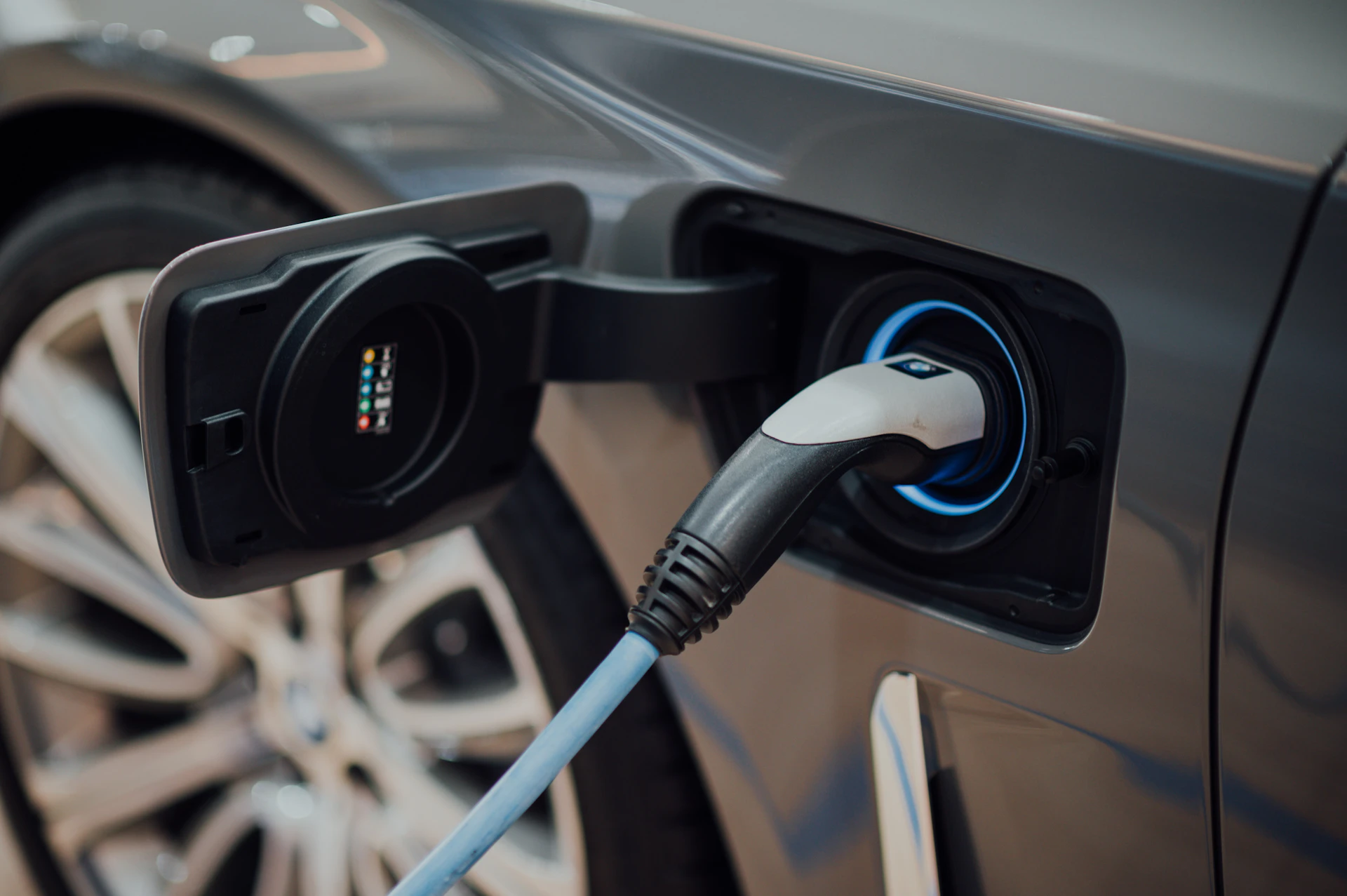
Electric airport transfers have moved from the “interesting option” tier to the default in many major European cities. For travellers, the practical implications are simple: fewer noisy rides, lower emissions, and (crucially) the same fixed price at booking. This guide covers where electric vehicles are available, how they compare with petrol, and how to request an EV in the booking flow.
Where EV transfers are widespread in 2026
European cities lead. Most of the major hubs offer substantial EV inventory across the airport-transfer network:
- Amsterdam: high EV share at Schiphol; a leading example
- London: widely available across Heathrow, Gatwick, Stansted, and London City
- Paris: increasing EV share at CDG and Orly
- Berlin: high EV share at BER
- Madrid and Barcelona: growing fleets, mid-2026 expansion
- Lisbon: EV share rising as the local network upgrades
- Copenhagen and Stockholm: high EV share, often the default
- Oslo: EV is the standard
Major North American cities are catching up rapidly: New York, Los Angeles, San Francisco, Vancouver, and Toronto all have EV options at booking. Asian cities (Singapore, Hong Kong, Tokyo) are growing through 2026.
For a refresher on the booking flow, see our airport transfer booking guide.
How EVs compare with petrol on the airport run
Three things matter: time, comfort, and emissions.
Time
No difference. The airport-to-city run is a short trip from an EV’s perspective; even a base-model EV with a small battery has multiples of the range needed.
Comfort
EVs are quieter at low and medium speeds, particularly noticeable on a long-haul evening arrival. Acceleration is smooth; the absence of engine noise tends to be the first thing travellers mention.
Emissions
A typical airport-to-city run in a petrol vehicle emits 4 to 6 kg of CO2; an EV charged on a moderately clean grid runs roughly a quarter of that. For corporate travellers with reporting requirements, the saving is meaningful and trackable.
How to request an EV at booking
The booking form shows vehicles with their fuel type. The standard pattern:
- Enter your route (pickup, drop-off, date, time)
- Enter passengers and luggage
- Filter the vehicle list for electric or hybrid
- Pick a vehicle and pay
The fixed price is set at booking. Cards and wallets accepted: Visa, Mastercard, Amex, Apple Pay, Google Pay, Alipay, iDEAL | Wero, PayPal, and major local methods.
If no EV is available for your specific route or time, the platform shows the next-best alternative. In most major cities at most hours, EV inventory is wide.
EV vehicle categories
Electric and hybrid vehicles fall across the standard categories:
- Compact EV: 1 to 2 passengers, 2 cases (Tesla Model 3, Polestar 2, equivalents)
- Estate or larger EV: 1 to 3 passengers, 3 cases (Tesla Model Y, ID.5, equivalents)
- Electric or hybrid minivan: 4 to 6 passengers, 4 to 5 cases
- Hybrid minibus (limited cities): up to 8 passengers
For a fuller view of vehicle sizes by group, see our vehicle size guide.
What to expect on the day
The meet-and-greet works the same as for any other booking. The driver waits inside arrivals at the meet point with a name board, helps with luggage, and walks you to the vehicle.
Three small differences worth noting:
- The vehicle is quieter; don’t expect the diesel-engine cue when the driver pulls up
- Charging stops on the airport run are extremely rare; in most cities, drivers charge between bookings
- Climate control is electric-driven; the cabin warms or cools faster than a typical petrol vehicle
When EV is the right choice
For the standard airport run, EVs perform identically to petrol vehicles on every dimension that matters to a traveller, while emitting roughly a quarter of the CO2. For corporate travellers with sustainability reporting, the saving is documented per ride.
For travellers prioritising a quiet arrival after a long flight, the comfort gap is real.
For more on the broader 2026 travel patterns shaping ground transport, see our travel trends piece.
Book your electric airport transfer and arrive cleanly.
Common questions
Frequently asked



Ready when you are
Fixed price at booking, vetted local driver, flight tracked from gate to kerb. Under two minutes to book.